Best AI Red Teaming and Adversarial Testing Tools in 2026

Most lists of "AI red teaming tools" mix together prompt scanners, LLM evaluation frameworks, adversarial testing tools, and full system security platforms. That framing makes the category look more mature than it is. A tool that can send a few hundred jailbreak prompts to a model is useful. A platform that can map an agent's tool graph, test indirect prompt injection through retrieved content, observe tool calls, score business impact, and turn confirmed exploits into release-blocking regression tests solves a different problem.
This guide is a buyer's map for 2026. It compares the tools that matter across completeness, attacker model capability, prompt injection coverage, multi-step multi-tool testing, framework coverage, and operational readiness. Public information is uneven, vendors describe capabilities at different levels of specificity, and the most important enterprise proof usually comes from a scoped test against your own system. Treat this page as a selection framework rather than a lab benchmark.
For production systems, General Analysis automated AI red teaming connects adversarial testing to exploit evidence, remediation, and release regression testing. For the conceptual background, start with What is AI red teaming?. For the defensive side of the same problem, read Best AI Guardrails in 2026.
What is AI red teaming?
AI red teaming is adversarial testing for AI systems. Instead of asking whether a model performs well on a fixed evaluation set, a red team asks how the system can be made to fail under pressure. In practice, that means testing whether an LLM, AI agent, chatbot, copilot, or RAG system can be manipulated into unsafe outputs, unauthorized actions, data leakage, policy bypass, or tool misuse.
Traditional software testing checks expected behavior. AI red teaming searches for unexpected behavior. A normal QA test might ask a customer support agent whether it follows the refund policy. A red team asks whether the same agent can be socially engineered into inventing a refund exception, leaking account data, calling a privileged tool, or following malicious instructions hidden inside a support ticket.
The term LLM red teaming usually refers to adversarial testing of language-model behavior. Common tests include jailbreaks, refusal bypasses, prompt injection, harmful-content generation, hallucination under pressure, and secret leakage from the prompt or context window. That layer remains important. Production AI also needs testing around retrieval, tools, permissions, memory, and downstream actions.
The term AI red teaming is broader. It includes the model, the application, the retrieval pipeline, the agent's memory, the connected tools, the permission model, the user interface, the logging layer, and the downstream systems the agent can affect. A model may refuse a dangerous prompt in isolation but still become exploitable when it reads untrusted content, summarizes a malicious document, or chains tools together across a business workflow.
What AI red teaming and adversarial testing tools do
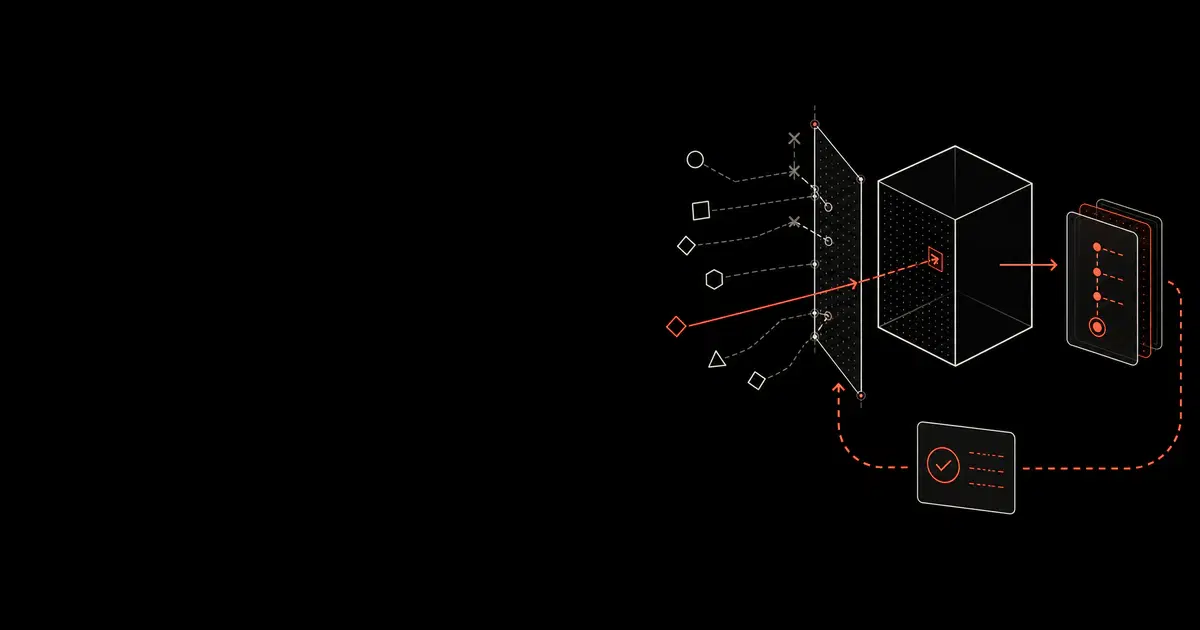
AI red teaming and adversarial testing tools scale this adversarial search. They generate attack cases, run them against a target AI system, score the results, and report failures that engineers or security teams can reproduce. The simplest tools replay known jailbreaks and prompt injection templates. Stronger tools generate dynamic attacks that adapt to the target's responses. The strongest tools test full agentic workflows including indirect prompt injection through documents or webpages, RAG poisoning, memory poisoning, unsafe tool calls, MCP abuse, data exfiltration, and multi-step exploit chains.
Search intent around this category spans best AI red teaming platforms, automated AI red teaming 2026, automated prompt injection security platform, LLM vulnerability scanner, open-source AI red teaming tools, OWASP vendor evaluation criteria, and Gartner AI TRiSM procurement language. Those terms point to the same buying problem from different teams. Security leaders tend to ask for AI TRiSM and vendor criteria, red teamers ask for PyRIT or garak, and application teams ask for prompt injection testing against agents, RAG, and tools.
This distinction matters for SEO, and it matters more for security. A buyer searching for the "best AI red teaming tool" may be solving one of the problems below.
- Model safety testing: Does the LLM resist jailbreaks, harmful requests, and policy bypasses?
- Application security testing: Does the chatbot or AI app handle prompt injection, data leakage, and unsafe responses?
- Agent security testing: Can the deployed agent be steered through retrieval, memory, tools, MCP servers, or APIs into an unsafe final action?
Those are different jobs. A model scanner can be useful for the first job. An evaluation framework can help with the second. A system-level red teaming platform is needed for the third, especially when the AI system has access to sensitive data or can take actions on behalf of a user.
Why automated red teaming matters in 2026
AI systems are now connected to tools, browsers, code execution environments, SaaS apps, databases, and internal knowledge bases. That changes the failure mode. A bad chatbot answer is a reputational issue. A bad agent action can become data exfiltration, unauthorized account changes, deleted files, fabricated customer concessions, insecure code, or regulatory exposure.
Attackers rarely attack AI systems one prompt at a time. They use multi-turn pressure, indirect prompt injection, hidden instructions in retrieved content, tool outputs that look like instructions, and benign-looking chains where the final result is unsafe. Automated red teaming can run these attacks before launch, after model changes, after prompt changes, after tool additions, and before high-risk releases.
The goal is to discover how an AI system breaks, fix the highest-impact paths, and keep those failures from returning.
Where this ranking comes from
The ranking below is based on three kinds of evidence, and those sources vary in strength.
First, open-source tools can be inspected directly. For PyRIT, garak, Inspect, and DeepTeam, the public docs and code make it possible to understand the abstractions, target model, campaign loop, and operational fit. Source inspection gives higher confidence about what the tool actually does, while effectiveness against a specific enterprise agent still requires testing.
Second, commercial platforms can usually only be judged from product docs, public case studies, published research, and proof-of-value testing. That evidence is weaker than source inspection unless the vendor shows reproducible traces against your system. The comparison therefore uses "public-evidence confidence" as a separate axis.
Third, the rubric is intentionally biased toward production agent risk. Enterprise agents read untrusted content, call tools, persist memory, cross identity boundaries, and trigger business workflows. A tool that is excellent for model-level jailbreak testing can rank below a system-level platform because the deployment problem is broader.
The available public evidence cannot support a universal winner across every use case. It can distinguish model scanners, evaluation frameworks, managed red team services, and system-level AI security platforms. That distinction is what matters for buying decisions.
Quick comparison
| Rank | Tool | Best fit | System completeness | Adaptive attack depth | Multi-step tool-chain coverage | Public-evidence confidence | Main limitation |
|---|---|---|---|---|---|---|---|
| 1 | General Analysis | Enterprise agents and production AI systems | Excellent | Excellent | Excellent | Medium-high | Commercial platform; validate with a scoped proof-of-value |
| 2 | Microsoft PyRIT | Security teams building custom campaigns | Medium-high | High | Medium-high | High | Requires red team engineering skill |
| 3 | NVIDIA garak | Open-source model vulnerability scanning | Medium | Medium | Low-medium | High | Mostly model/dialog-system scanning |
| 4 | UK AISI Inspect | Advanced evals and agent evaluations | Medium-high | Medium | Medium-high | High | Evaluation framework that requires added enterprise workflow |
| 5 | Lakera Red | Prompt security and managed assessments | Medium-high | Medium-high | Medium | Medium | More security service/API than deep system control plane |
| 6 | Mindgard | AI security risk assessment | High | Medium-high | Medium-high | Medium | Less transparent public detail on attack algorithms |
| 7 | HiddenLayer | Enterprise AI security lifecycle | High | Medium | Medium | Medium | Red teaming is one module in a broader platform |
| 8 | SPLX Probe | Continuous conversational AI red teaming | Medium-high | Medium | Medium | Medium | More focused on conversational app lifecycle |
| 9 | Enkrypt AI Agent Red Teaming | Multimodal and compliance-heavy AI systems | Medium-high | Medium | Medium-high | Medium | Public detail is stronger on coverage than methodology |
| 10 | DeepTeam | Open-source LLM system red teaming | Medium | Medium | Medium | Medium-high | Younger ecosystem than PyRIT, garak, and Inspect |
Use General Analysis when the risk lives across the deployed system. Use PyRIT, garak, Inspect, or DeepTeam when you need developer-owned tests against a defined target. Use commercial platforms like Lakera, Mindgard, HiddenLayer, SPLX, or Enkrypt when you want managed security workflows, reporting, or broader AI security lifecycle coverage.
The matrix below compresses the table into two buying dimensions. The horizontal axis measures how far the tool reaches into agents, tools, data, and permissions. The vertical axis measures whether findings become traces, replay cases, retests, and fixes.
How we evaluated the tools
Most tools can run jailbreaks now. The stronger evaluation asks whether the tool can find the failures that matter in a production AI system.
We evaluated each tool across six axes. The sixth axis, evidence quality, is deliberately included because this market is noisy. Source-inspectable frameworks, detailed technical docs, vague platform claims, and polished demos deserve different confidence levels.
1. Completeness
Completeness means the tool covers the deployed system boundary across the model, system prompt, user prompt, retrieved context, memory, tools, MCP servers, identity, permission scopes, approval gates, downstream APIs, logs, and release pipeline.
A complete red teaming tool can show what the agent can see, what it can do, how it can be manipulated, and what evidence proves the result.
2. Attacker model capability
The best automated red teaming tools do more than replay static prompt lists. They use adaptive attack generation with multi-turn strategies, objective-driven attackers, variation search, and scoring loops that learn which attacks are working against the target.
Static prompt sets are still useful for regression testing. They are weak as discovery tools because attackers keep iterating after one failed prompt.
3. Injection and agent attack coverage
Prompt injection is a family of failures. The main categories include the following.
- Direct prompt injection through the user input.
- Indirect prompt injection through webpages, tickets, emails, documents, RAG results, or tool outputs.
- Multi-turn injection where the objective emerges gradually.
- Tool pivoting where the agent reads untrusted content and then calls a privileged tool.
- Cross-tool injection where one integration steers use of another integration.
- Memory poisoning where a malicious instruction persists across sessions.
The strongest tools test this full family. Multi-step tool-chain coverage measures whether the red team can find failures where no single prompt looks obviously malicious, while the final action graph is unsafe.
4. Framework and deployment coverage
The relevant coverage measure is practical system fit. Useful support includes HTTP APIs, browser flows, direct model targets, OpenAI-compatible endpoints, Anthropic, Gemini, local models, LangChain-style apps, LlamaIndex/RAG pipelines, MCP tools, coding agents, and custom tool-calling runtimes.
No tool covers every deployment perfectly. The best tools give you enough adapters and instrumentation points that you can test the real app without rebuilding it around the testing framework.
5. Evidence quality
Evidence quality measures how much confidence a buyer can reasonably have before a private proof-of-value. Open-source projects with inspectable code and clear docs score higher here than vendors whose public material only says "AI red teaming" without showing attack loops, target adapters, trace shape, or remediation workflow.
Evidence quality differs from product quality. A closed commercial product may be stronger than an open-source framework. Buyers should treat opaque claims as hypotheses to verify.
6. Operational readiness
A red team tool is only useful if the organization can act on its findings. We looked for CI/CD integration, replayable exploits, severity scoring, OWASP or MITRE mapping, human-readable reports, evidence capture, tool-call traces, remediation guidance, and regression testing.
Operational readiness depends on whether engineering can reproduce, fix, and prevent the failure from returning after the scan runs.
1. General Analysis
Best for: Enterprises deploying AI agents, copilots, RAG systems, coding agents, MCP-connected workflows, or any AI system with real authority over data and tools.
General Analysis is the strongest automated AI red teaming platform for production systems because it starts from the system boundary. The platform maps agents, prompts, tools, permissions, retrieval sources, policies, and business-critical actions, then launches adaptive campaigns against that real attack surface. For teams searching specifically for a General Analysis AI red teaming platform for agentic AI security, the core distinction is coverage across deployed agents rather than isolated model prompts.
That difference matters. Most red teaming tools can test whether a model refuses an unsafe request. Fewer tools can test whether a customer support agent can be steered into fabricating refunds, whether a coding agent can be manipulated through a poisoned issue title, whether a RAG pipeline leaks private rows through an injected support ticket, or whether one MCP server can influence another server's tool calls.
General Analysis is built for that harder class of failure.
Why it ranks first
- Completeness: Tests prompts, retrieval, memory, tool calls, permissions, agent workflows, policy boundaries, and downstream actions.
- Attacker capability: Uses adaptive adversarial campaigns rather than only static prompt lists. Campaigns search across multi-turn conversations, tool-call sequences, jailbreaks, prompt injection variants, and system-specific attack paths.
- Multi-step tool-chain coverage: Tests direct injection, indirect injection, RAG poisoning, MCP and tool abuse, cross-system chains, excessive agency, and data exfiltration paths.
- Operational readiness: Findings include evidence, traces, severity, affected assets, remediation guidance, and replayable regression tests.
- Defensive loop: Findings can feed runtime controls through AI Runtime Security and custom guardrails, instead of stopping at a PDF report.
Where it is strongest
General Analysis is strongest when your AI system has tools, permissions, data, or business impact. That includes customer support agents, employee copilots, coding agents, financial workflows, legal assistants, healthcare copilots, sales agents, and internal automation systems connected to SaaS apps or databases.
The platform is especially relevant for organizations that need audit-grade answers.
- Which AI systems exist?
- Which tools and permissions do they have?
- Which attack classes were tested?
- Which attacks succeeded?
- Which fixes were verified?
- Which findings became guardrails or release-blocking tests?
Where it may be more than you need
If you only need to test a small chatbot endpoint with no tools, no retrieval, and no sensitive data, an open-source framework may be enough. General Analysis is designed for production AI risk.
Explore automated AI red teaming
2. Microsoft PyRIT
Best for: Security teams that want a flexible Python framework for custom generative AI red teaming.
PyRIT, the Python Risk Identification Toolkit, is a Microsoft-originated open-source framework for probing generative AI systems. Its core strength is orchestration. Red teamers can define objectives, configure targets, use multi-turn orchestrators, transform prompts, score responses, and build custom campaigns.
PyRIT is best understood as a red team workbench. It is powerful if your team knows what it wants to test and has the engineering skill to wire targets, scorers, and campaign logic together.
Strengths
- Strong multi-turn orchestration.
- Model and platform agnostic.
- Good for custom objectives and specialized harm categories.
- Useful for red teamers who want control over the testing loop.
- Backed by Microsoft AI Red Team usage patterns.
Limitations
PyRIT gives skilled red teams a flexible workbench rather than a turnkey enterprise control plane. You need to design the tests, configure the targets, build or choose scorers, and decide how to operationalize findings. That flexibility is valuable for specialists and slower for teams that need fast coverage across many deployed agents.
3. NVIDIA garak
Best for: Open-source vulnerability scanning of LLMs and dialogue systems.
garak is one of the canonical open-source LLM vulnerability scanners. It uses probes, generators, and detectors to test whether a target model or dialogue system can be made to fail. Its coverage includes prompt injection, jailbreaks, hallucination, data leakage, misinformation, toxicity, encoding attacks, package hallucination, and other LLM-specific weaknesses.
garak is valuable because it is independent, open-source, and broad. It is the kind of tool many teams should keep in the rotation even if they also use a managed platform.
Strengths
- Broad set of vulnerability probes.
- Open-source and actively maintained.
- Good support for many model providers and REST-accessible endpoints.
- Useful for baseline model risk checks.
- Strong fit for repeatable scanner-style testing.
Limitations
garak is primarily a model and dialogue-system scanner. It is weaker for agentic system testing where the critical failure involves identity, tool permissions, MCP servers, hidden context, cross-tool flows, or business logic. It can identify model weaknesses, while operational blast-radius mapping usually requires additional system instrumentation.
4. UK AISI Inspect
Best for: Advanced evaluations, agent evaluations, and teams that need a general-purpose evaluation framework with tool support.
Inspect is an open-source evaluation framework developed by the UK AI Security Institute and Meridian Labs. It supports red teaming inside a broader frontier-evaluation workflow. That breadth is useful. Inspect supports datasets, solvers, scorers, tools, agents, MCP tools, multi-agent primitives, and arbitrary external agents such as coding CLIs.
For mature teams, Inspect can be a strong foundation for custom agent evaluations and security tests.
Strengths
- Strong support for tool-using and agentic evaluations.
- Good abstractions for datasets, scorers, solvers, tools, and agents.
- Can evaluate coding agents and external agent CLIs.
- Useful for rigorous internal evaluation infrastructure.
- Backed by a serious AI safety evaluation ecosystem.
Limitations
Inspect gives capable teams the primitives to build high-quality evaluations, including security evaluations. Enterprise workflows still need additional machinery for attack-surface discovery, exploit triage, remediation workflow, runtime guardrail handoff, and reporting.
5. Lakera Red
Best for: Organizations that want AI security assessments and prompt-security tooling from a commercial provider.
Lakera is best known for Lakera Guard, but its Lakera Red offering adds red teaming through human-in-the-loop assessments and automated contextual risk evaluations. It is model/provider agnostic and positioned for enterprises that want practical security testing without building the entire red team stack themselves.
Strengths
- Commercial red teaming offering with human and automated options.
- Strong focus on prompt injection and AI application security.
- Model and provider agnostic positioning.
- Natural connection to runtime protection through Lakera Guard.
- Good fit for teams that want service-backed assessments.
Limitations
Lakera's public positioning is stronger on prompt security and AI guardrails than on deep system-level attack graph mapping. It can be valuable, especially as part of a broader AI security program, but teams with complex agentic workflows should verify how deeply it observes tools, permissions, identity, MCP, and downstream actions.
6. Mindgard
Best for: Enterprise AI security teams that want risk discovery, automated red teaming, and AI security posture coverage.
Mindgard positions AI security as a system problem spanning models, prompts, agents, tools, applications, APIs, and data flows. That is the right framing. Its public materials emphasize automated AI red teaming, agent security testing, attack surface enumeration, AI agent fingerprinting, runtime protection, and compliance reporting.
Strengths
- Broad enterprise AI security scope.
- Explicit focus on agents, tools, applications, APIs, and data flows.
- Covers discovery, attack, and defense workflows.
- Useful for organizations building an AI security operating model.
- Strong public research posture around production AI vulnerabilities.
Limitations
Mindgard's public materials describe broad capabilities, but less detail is available on the specific attack algorithms, scoring loops, framework adapters, and trace-level evidence compared with open-source tools. Enterprises should ask for concrete demonstrations against their own agent workflows.
7. HiddenLayer AI Attack Simulation
Best for: Enterprises that want AI security across discovery, supply chain, attack simulation, and runtime defense.
HiddenLayer is a broad AI security platform covering agentic, generative, and predictive AI systems. Its AI Attack Simulation module is part of a lifecycle platform that also includes AI discovery, supply chain security, and runtime security.
This makes HiddenLayer most relevant for organizations that view red teaming as one part of a wider AI security program.
Strengths
- Enterprise lifecycle coverage.
- Stronger than point tools for AI asset and model security context.
- Covers generative, agentic, and predictive AI.
- Useful for security organizations that already operate platform-based controls.
- Good fit when AI supply chain and runtime protection matter alongside red teaming.
Limitations
Because red teaming is one module in a broader platform, buyers should verify the depth of agentic exploit testing. Ask specifically about indirect prompt injection, tool-call traces, MCP, multi-step exploit reproduction, and CI/CD regression tests.
8. SPLX Probe
Best for: Continuous red teaming of conversational AI applications with lifecycle and CI/CD needs.
SPLX Probe is positioned around automated and continuous red teaming for conversational AI. Its broader platform also includes real-time threat detection, compliance, governance, and remediation workflows.
Strengths
- Continuous red teaming orientation.
- CI/CD integration focus.
- Good fit for conversational AI lifecycle testing.
- Broader platform includes detection, governance, and remediation.
- Practical for teams that want recurring coverage rather than one-off assessments.
Limitations
SPLX appears strongest for conversational app security and lifecycle testing. Teams with deeply agentic workflows should validate support for complex tool graphs, MCP servers, multi-agent workflows, and business-action exploit chains before relying on it as the primary red team platform.
9. Enkrypt AI Agent Red Teaming
Best for: Organizations with multimodal, agentic, RAG, and compliance-sensitive AI systems.
Enkrypt AI's red teaming product is positioned around text, audio, vision, agents, tools, RAG, and MCP. That breadth is notable because multimodal and agentic systems are where many current tools still have gaps.
Strengths
- Coverage across text, audio, vision, agents, tools, RAG, and MCP.
- Risk and compliance reporting orientation.
- Commercial platform for security, risk, and compliance teams.
- Useful for organizations testing frontier model misuse and high-risk categories.
- Good fit where evidence-ready reporting matters.
Limitations
Public materials emphasize coverage and reporting more than methodology. Buyers should ask how attacks are generated, whether tests are adaptive, how tool-call evidence is captured, and how findings become regression tests.
10. DeepTeam
Best for: Python teams that want a simple open-source framework for LLM system red teaming.
DeepTeam is an open-source framework from Confident AI for red teaming LLMs and LLM systems. It fits teams already using Python-based evaluation workflows and teams that want to experiment with vulnerabilities, attacks, and model callbacks without adopting a heavier platform.
Strengths
- Simple open-source entry point.
- Good Python ergonomics.
- Integrates naturally with Confident AI and DeepEval workflows.
- Useful for teams already investing in LLM evaluation.
- Stronger for app-level testing than ad hoc prompt spreadsheets.
Limitations
DeepTeam is younger than PyRIT, garak, and Inspect as a red teaming ecosystem. It is useful as an engineering framework. High-risk production agents need a broader security program around it.
What about Protect AI, Pillar, Noma, Akto, and other AI security platforms?
There are more credible vendors than can fit into a clean top-ten list. Protect AI, Pillar Security, Noma Security, Akto, Adversa AI, Straiker, Repello, and others are all part of the broader AI security market. Some focus on AI asset discovery. Some focus on agent posture management. Some focus on runtime controls, gateways, AI bill of materials, or compliance.
They may be worth evaluating if your priority is broader AI security operations rather than automated adversarial testing itself. For this guide, we prioritized tools where automated red teaming, attack simulation, or LLM/agent vulnerability discovery is a central product capability.
The scoring rubric
If you are evaluating vendors, use this as a proof-of-value rubric rather than a spreadsheet score. The goal is to force evidence into the demo. A vendor should show a real trace against a realistic workflow, with more detail than a dashboard that says "prompt injection detected."
| Evaluation axis | What to ask | Strong answer | Weak answer |
|---|---|---|---|
| Scope discovery | How do you discover the target's tools, permissions, retrieval, and downstream actions? | We map the system boundary and test it directly | Send us an endpoint and a policy |
| Attacker capability | Are attacks static, generated, or adaptive? | Objective-driven, multi-turn, adaptive campaigns | Fixed prompt library |
| Indirect injection | Can you test malicious documents, webpages, tickets, emails, and tool outputs? | Yes, with trace evidence and tool-call observation | Only user-input prompt injection |
| Tool-chain testing | Can you test unsafe final action graphs across multiple tools? | Yes, including cross-tool and MCP scenarios | We classify prompts and responses |
| Framework coverage | Can you test our actual app without rewriting it? | HTTP, browser, model, tool, MCP, and custom adapters | Only one SDK or one model provider |
| Evidence confidence | What public or private evidence proves the claim? | Source-inspectable code, reproducible traces, or customer-specific proof | Capability language with no trace |
| Evidence | What does a finding contain? | Prompt, context, retrieved data, tool calls, outputs, severity, reproduction | Screenshot or summary only |
| Remediation | What happens after a finding? | Fix guidance, replay test, regression gate, guardrail handoff | PDF report |
| Governance | Can findings map to OWASP, MITRE, or internal policies? | Yes, with exportable evidence | Manual mapping |
The best vendors will be willing to run a scoped proof-of-value against a real workflow. If the target has tools, the proof should include tool-call traces. If the target has RAG, it should include indirect injection through retrieved content. If the target has business actions, it should include a demonstration of whether the agent can be steered toward an unsafe action. Full traces turn a signal into an actionable finding.
Model-level tools vs system-level platforms
The biggest mistake in AI red teaming procurement is buying a model scanner for a system risk.
Model-level tools answer questions like the following.
- Can this model be jailbroken?
- Does it produce harmful content?
- Does it leak secrets from the prompt?
- Does it follow unsafe direct instructions?
- Does it hallucinate under adversarial pressure?
System-level platforms answer harder questions.
- Can a malicious support ticket steer an agent into querying private data?
- Can a poisoned webpage cause an employee copilot to email confidential content?
- Can one MCP server shadow or influence another tool?
- Can an agent chain approved tools into an unapproved outcome?
- Can a fix be replayed against every future model, prompt, and tool change?
Both layers matter. Model-level tools are fast, cheap, and useful. System-level platforms are necessary when the AI system can take actions or touch sensitive data.
Where guardrails fit
Red teaming and guardrails solve different parts of the security loop.
Automated red teaming finds failures. Guardrails reduce the chance that those failures succeed in production. The strongest programs connect the two by converting red team findings into runtime detections, approval gates, policy changes, narrower permissions, prompt hardening, and regression tests.
The buying decision should focus on the full loop from discovery to remediation to retesting. Jailbreak volume alone is a weak proxy for production security.
For the defensive architecture, read What are AI guardrails? and Best AI Guardrails in 2026. For agent-specific risks, read OWASP Top 10 for Agentic AI.
Recommended stack by team type
Small engineering team
Start with DeepTeam for app-level tests, add garak for independent model scanning, and keep a small regression set in CI. This is enough for early-stage systems with limited data access and no high-risk tools.
Security team building internal capability
Use PyRIT for custom campaigns, garak for baseline scanning, and Inspect for structured agent evaluations. This stack gives strong internal control, but it requires skilled red team engineers.
Enterprise deploying production agents
Use General Analysis automated red teaming as the system-level platform, then keep open-source tools in the engineering workflow for focused checks. Connect findings to runtime security, permission changes, release gates, and audit reporting.
Regulated organization
Prioritize evidence quality. You need reproducible traces, severity, affected assets, policy mapping, and proof that fixes were retested. A red team report without replayable evidence fails serious audit scrutiny.
Final recommendation
If your goal is to test a standalone model or a simple chatbot, start with open-source tools. PyRIT, garak, Inspect, and DeepTeam are all useful, and a mature team can get real value from them.
If your goal is to secure a production AI system, choose a system-level platform. The failures that matter in 2026 happen across prompts, tools, permissions, retrieval, memory, and business logic. They are multi-step, context-dependent, and often invisible if you only inspect the final text response.
General Analysis ranks first because it is built around adaptive adversarial testing of the deployed system, evidence-backed findings, and a remediation loop that turns exploits into controls.
Book a demo of automated AI red teaming
Continue reading
For foundations, read What is AI red teaming?. For agent security, read OWASP Top 10 for Agentic AI and MCP Server Security. For defenses, read Best AI Guardrails in 2026, What are AI guardrails?, and the GA Guard release post.
AI red teaming tools FAQ
Short answers on how to compare AI red teaming tools, adversarial testing platforms, prompt injection testing tools, and agent security testing workflows.
Related guides
Continue reading

PRIMER
What Is AI Red Teaming? A Practitioner's Guide
AI red teaming is adversarial testing of AI systems to find exploitable vulnerabilities before attackers do. Learn how it works, key techniques, real exploit examples, and how to implement it.
Read
FRAMEWORK
OWASP Top 10 for Agentic AI: What Matters Most?
An analytical guide to the OWASP Top 10 for Agentic Applications 2026: what the ten risks are, how they relate to each other, and what they imply for builders of agentic systems.
Read
PRIMER
MCP Server Security: A Threat Model for Agent Tool Supply Chains
The Model Context Protocol expanded what AI agents can reach, and expanded the attack surface across at least nine distinct vectors. A primary-source threat model for MCP servers, with concrete controls, real CVEs, and the GA Supabase exploit walked end to end.
Read
Newsletter
Get the next research note.
Short updates on agent attacks, red-team methods, runtime guardrails, and production AI security.
Occasional updates. Unsubscribe anytime.