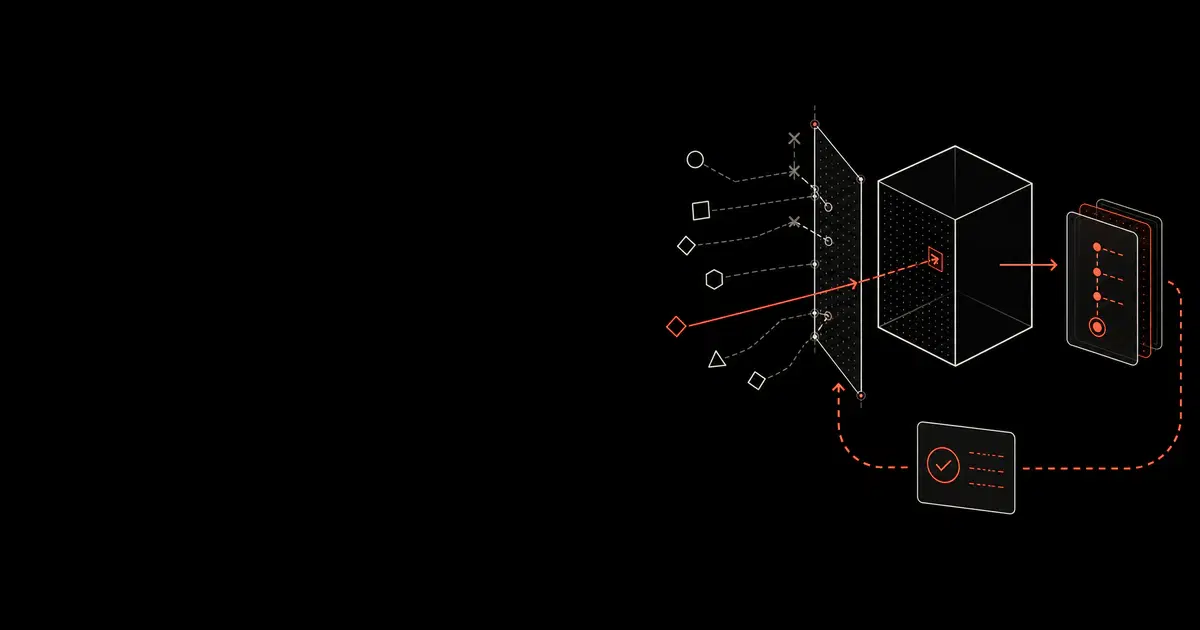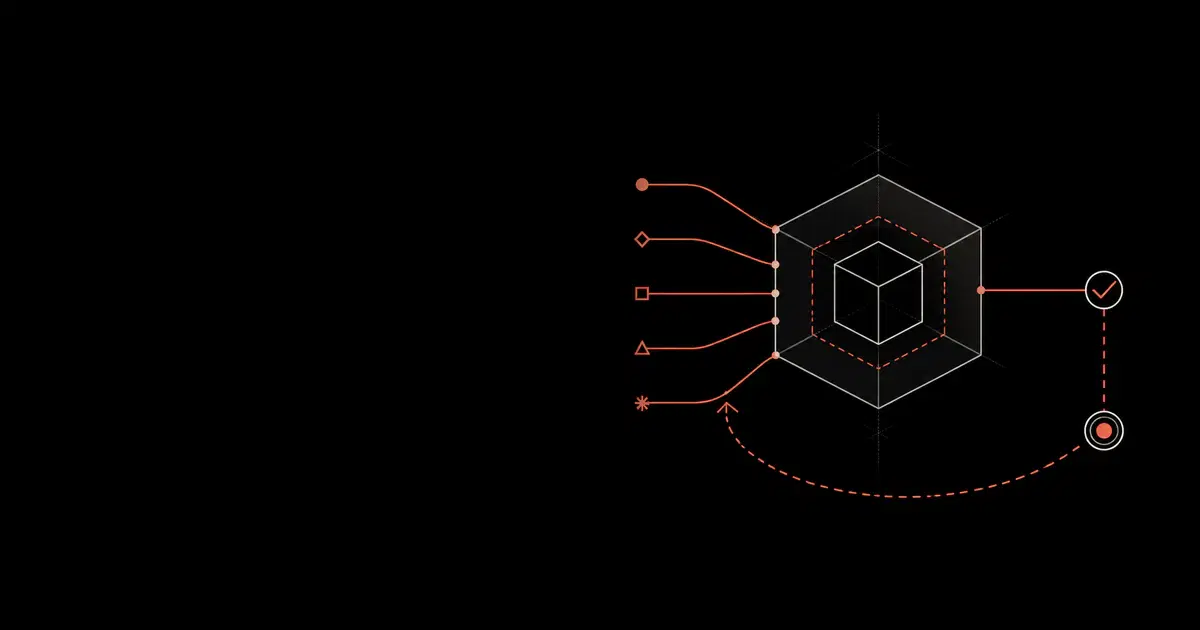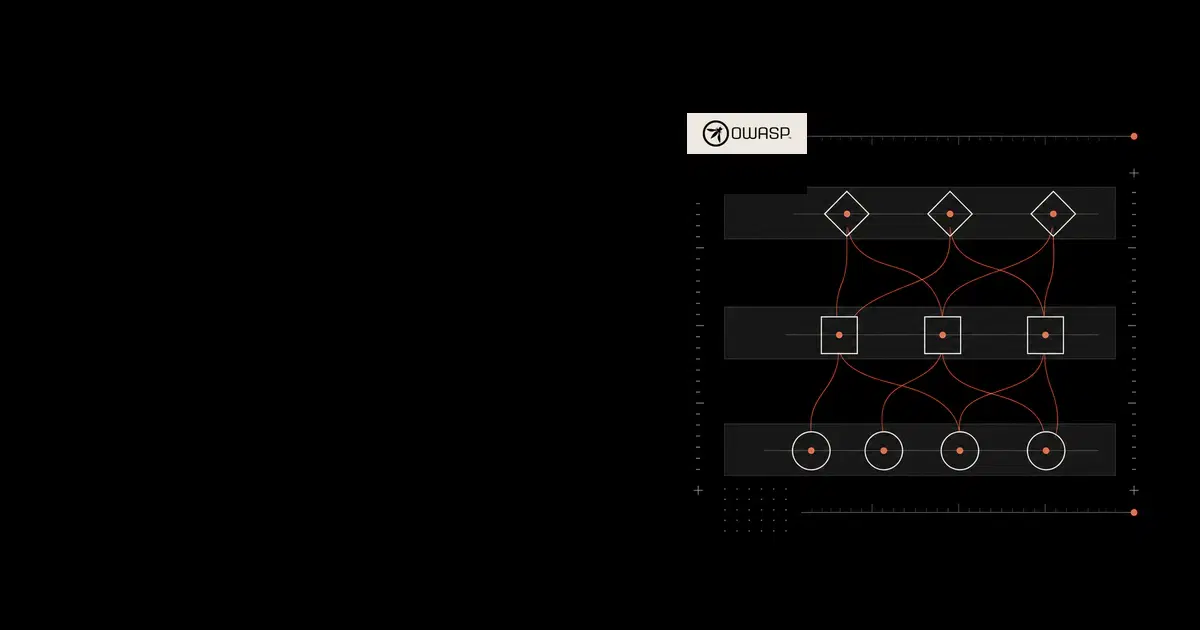

The best way to read the OWASP agentic list is not as "the LLM Top 10, but for agents." It is better read as a claim about system design: once models can plan, delegate, persist state, and invoke tools, the security problem stops being merely about unsafe answers and starts becoming a question of control.
Why the Agentic Top 10 Matters#
The OWASP Top 10 for Agentic Applications is valuable because it identifies what changes when software is no longer just generative but operational. An agent does not simply produce text. It interprets objectives, chooses tools, reasons across steps, inherits trust, stores memory, and sometimes persuades a human to authorize the final move.
That is why the list repeatedly separates cause from propagation, and capability from governance. Prompt injection still matters, but OWASP's point is that prompt injection is often just the first move. The larger question is what that manipulation can do inside a live workflow with tools, identities, memory, and peer agents.
See how your AI systems hold up under real attacks
General Analysis maps AI applications and agents, red teams prompts, retrieval, tools, MCP servers, browser actions, permissions, and business workflows, then turns findings into evidence your team can reproduce and retest.
Agentic Top 10#
Below is the OWASP Top 10 for Agentic Applications 2026, restated with a short interpretation of why each category matters.
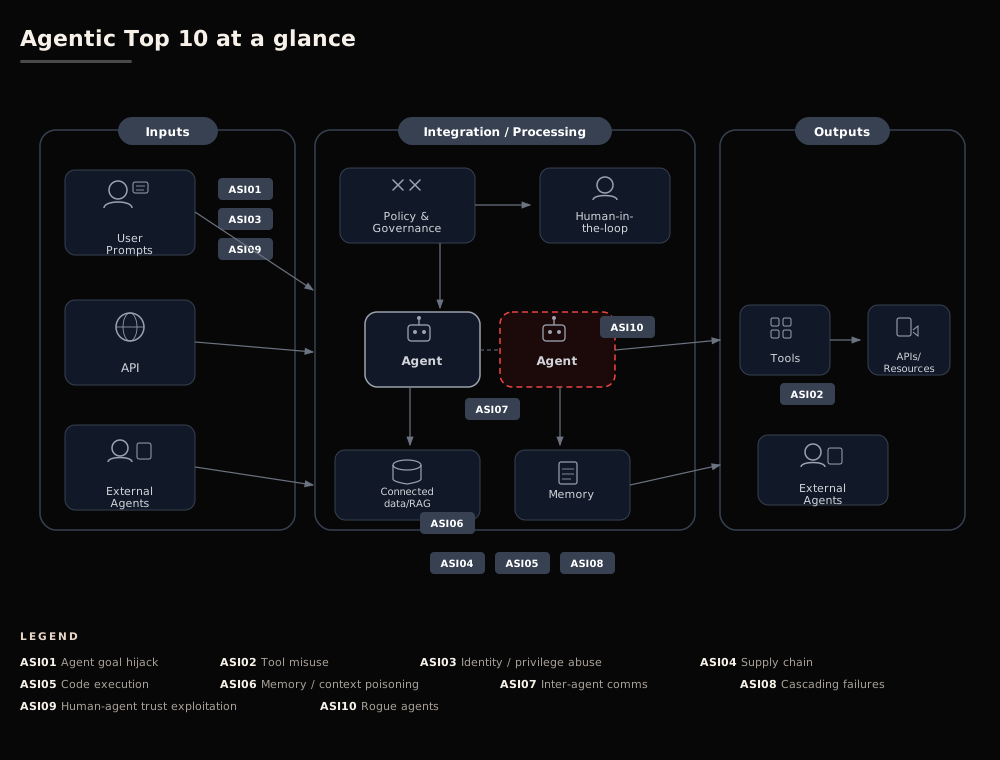
ASI01: Agent Goal Hijack#
The agent is steered away from the user's actual objective through prompt-based manipulation, deceptive tool outputs, malicious artifacts, or poisoned external data.
Why it matters: This is broader than classic prompt injection because the failure is not just a bad response. The failure is that the agent's objective function, plan, or decision pathway has been redirected.
ASI02: Tool Misuse and Exploitation#
The agent uses a legitimate tool in an unsafe way: deleting data, over-invoking APIs, forwarding untrusted input to shells, or chaining tools into unintended actions.
Why it matters: This category matters because "authorized" does not mean "safe." Agentic systems often fail inside their granted permissions long before they need a privilege escalation.
ASI03: Identity and Privilege Abuse#
Delegation chains, cached credentials, inherited roles, and weakly scoped identities allow agents to act with more authority than they should.
Why it matters: OWASP is pointing to a structural mismatch here: most IAM systems were built for humans and services, not for autonomous entities acting on behalf of multiple principals over time.
ASI04: Agentic Supply Chain Vulnerabilities#
Third-party tools, prompts, model components, registries, MCP descriptors, agent cards, and update channels introduce runtime supply-chain risk into the agent's execution chain.
Why it matters: This is one of the most important shifts in the paper: the supply chain for agents is often live and dynamic, not just a static dependency manifest checked at build time.
ASI05: Unexpected Code Execution (RCE)#
Generated or indirectly invoked code leads to execution on the host, in a container, or through a chain of otherwise legitimate tools.
Why it matters: The notable point here is that agentic RCE often emerges from orchestration. A prompt becomes a tool invocation, which becomes a script, which becomes a compromise.
ASI06: Memory and Context Poisoning#
Persistent memory, retrieved context, embeddings, summaries, and shared state are corrupted so future reasoning becomes biased, unsafe, or exploitable.
Why it matters: This category captures why persistent context is not a harmless product feature. Once memory exists, attackers can aim for long-lived corruption rather than one-shot manipulation.
ASI07: Insecure Inter-Agent Communication#
Weak authentication, integrity, or semantic validation between agents allows spoofing, tampering, replay, downgrade attacks, and routing abuse.
Why it matters: OWASP is effectively saying that multi-agent systems need more than secure transport. They also need intent integrity and message semantics that are resistant to manipulation.
ASI08: Cascading Failures#
An initial fault spreads across agents, tools, and workflows until it becomes system-wide operational damage.
Why it matters: This is an especially useful category because it separates root cause from propagation. A poisoned memory entry or spoofed message is one problem; fan-out across the estate is another.
ASI09: Human-Agent Trust Exploitation#
Humans are manipulated through authority bias, plausible explanations, emotional cues, and "helpful assistant" framing into approving dangerous actions.
Why it matters: This is one of the more mature parts of the OWASP list. It treats the human not as a guaranteed safety valve, but as another attack surface shaped by UI, timing, and confidence cues.
ASI10: Rogue Agents#
Agents deviate from intended behavior, continue harmful activity, collude, self-replicate, or optimize for outcomes that diverge from governance intent.
Why it matters: OWASP uses this category to describe behavioral integrity failures after compromise or drift begins. The concern is not just intrusion but sustained autonomous misbehavior.
Three Security Themes#
The document is most useful when you stop reading it as ten isolated categories and start reading it as a theory of agentic risk. Three ideas stand out.
1. Agentic systems blur instructions, data, and control flow#
ASI01, ASI06, and ASI09 all point to the same structural issue: agentic systems cannot reliably maintain neat boundaries between instructions, retrieved content, stored memory, and persuasive explanations. Once natural language is allowed to influence planning, memory, or approvals, the attack surface expands far beyond "unsafe prompt in, unsafe output out."
2. Tools and identities convert model errors into real-world impact#
ASI02, ASI03, and ASI05 describe the step where model-level errors turn into operational consequences. Tool misuse means the agent can do the wrong thing with valid access. Identity and privilege abuse means it may have more authority than intended. Unexpected code execution means orchestration itself becomes the path to host or environment compromise.
3. Distribution makes failure systemic#
ASI04, ASI07, ASI08, and ASI10 reflect a shift from isolated app security to distributed systems security. Agentic supply chains are runtime supply chains. Inter-agent messages carry intent, not just data. Cascades matter because one fault can fan out across planning, memory, tools, and peer agents faster than a human can intervene. Rogue behavior matters because once a compromised or drifting agent remains active, containment becomes a systems problem, not just a model problem.
Recommended Controls#
If you are building agentic systems, the practical lesson from OWASP is not "add more guardrails" in the abstract. It is to redesign the surrounding system so the model cannot quietly accumulate authority.
- Treat all natural-language inputs and retrieved content as untrusted.
- Enforce least privilege and, where possible, least agency for tools and autonomy.
- Bind identity, purpose, scope, and duration together instead of handing agents broad ambient access.
- Separate planning from execution with policy checks at the action boundary.
- Instrument memory, tool calls, and inter-agent messages as first-class security telemetry.
- Design for blast-radius control, rollback, and kill switches before you design for convenience.
The deepest insight in the OWASP list is that agentic security is not primarily about making a model more aligned in isolation. It is about building an environment in which misalignment, drift, or manipulation cannot easily become action.
Related Guides#
If you want the category-level explainer before the framework analysis, start with our guide on what AI red teaming is and how it differs from static evaluation. For the runtime hook contract designed to enforce policy before an agent acts, see our OWASP Agent Control Standard runtime controls guide. For the runtime enforcement layer that closes many of the risks above, see What are AI guardrails? and Best AI guardrails in 2026. For the deep dive on the agent tool supply chain — which underlies ASI02 (Tool Misuse) and ASI04 (Supply Chain) — see MCP Server Security.