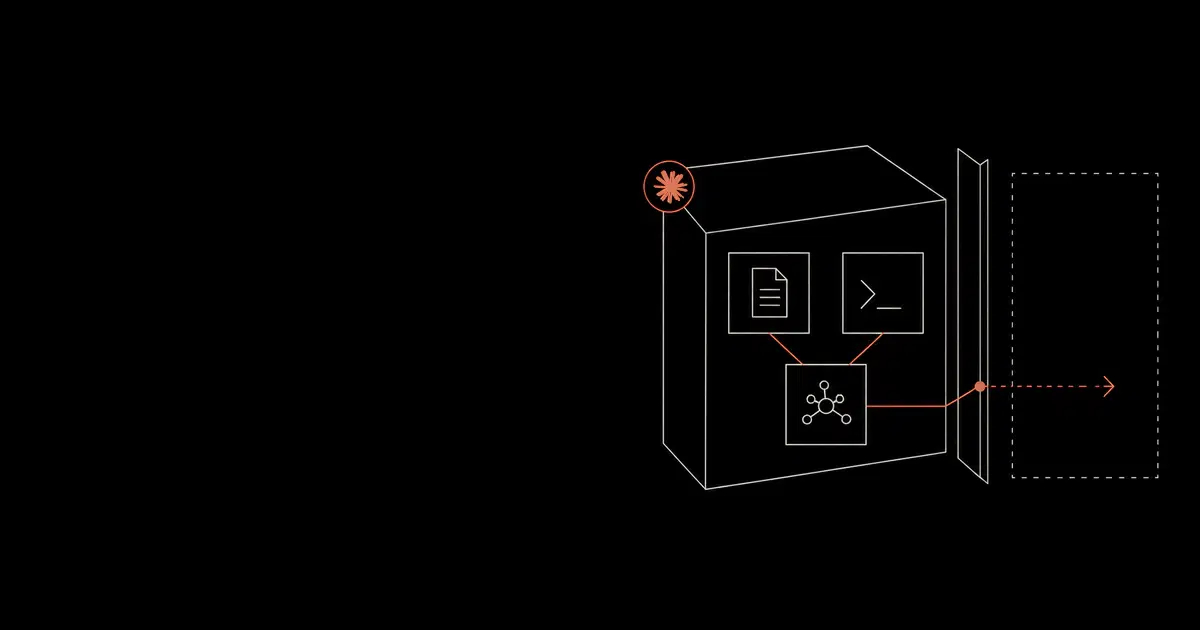

Claude Code enterprise security deployment is an engineering and security program. The product can improve developer velocity, but the rollout needs account policy, device policy, repository scoping, permission rules, sandboxing, MCP controls, hooks, telemetry, and release gates.
Anthropic documents enterprise-relevant controls across Claude Code security, settings, development containers, corporate proxy configuration, managed MCP, hooks, and monitoring. The deployment plan should combine them before broad rollout.
Executive Summary#
Claude Code enterprise deployment should follow the same discipline as rolling out a CI runner, endpoint developer tool, package manager, and internal automation platform. The agent reads code, writes code, runs commands, calls tools, and can participate in release workflows. That authority should be scoped, logged, tested, and governed.
The strongest enterprise pattern uses managed settings for policy, isolated execution for high-risk work, proxy or gateway routing for network control, approved MCP servers for tool access, managed hooks for deterministic enforcement, OpenTelemetry for evidence, and CI/CD release gates for production changes.
Rollout should happen in phases. Start with a small pilot, measure blocked actions and developer friction, tune rules, add telemetry, red team the actual workflows, then expand by repository risk tier.
Enterprise Requirements#
Before selecting deployment mechanics, define the enterprise requirements for Claude Code. Security teams should know which business units can use it, which repositories are in scope, which data types are allowed, which providers are approved, which model traffic must pass through a proxy, and which actions require independent approval.
Regulated teams should define retention rules for prompts, source code, tool arguments, command output, and telemetry. Some organizations need detailed evidence for audits. Others need strict minimization because prompts and tool output can contain proprietary code or customer data.
Procurement and platform teams should also define account type, data usage policy, SSO expectations, device posture, egress routing, model-provider paths, and incident-response contacts. These decisions should be complete before the deployment becomes a developer default.
Searches for Claude Code enterprise security deployment usually combine product setup with security operations. The common terms are Claude Code enterprise security, Claude Code managed settings, Claude Code dev container, Claude Code corporate proxy, Claude Code MCP, Claude Code hooks, Claude Code OpenTelemetry, Claude Code CI/CD security, and Claude Code prompt injection. The deployment plan should cover all of those areas because they are the controls buyers need before broad rollout.
The enterprise requirement should be written as a deployment standard. Claude Code can be used on approved accounts, approved devices or workspaces, approved repositories, approved MCP servers, approved network paths, and approved CI profiles. Actions that read secrets, move data, deploy code, mutate infrastructure, publish packages, or change control-plane files should require policy approval and audit evidence.
For security leadership, the clearest sentence is direct. Claude Code enterprise security deployment requires managed settings, scoped execution, controlled network egress, governed MCP servers, managed hooks, OpenTelemetry evidence, and release gates for privileged workflows.
Governance Decisions Before Rollout#
The first enterprise decision is where Claude Code is allowed to run. A managed laptop, cloud workspace, dev container, VM, and CI runner have different security properties. The team should document which runtime is allowed for each repository tier.
The second decision is which account and provider path is allowed. Enterprise deployments should use commercial accounts and approved provider routes. If Bedrock, Vertex AI, Microsoft Foundry, or Anthropic API paths are used, each route needs its own network, logging, and data-handling validation.
The third decision is who owns each control. Security engineering should own policy baselines, adversarial validation, evidence requirements, and incident response. Developer platform should own managed settings delivery, workspace templates, and developer experience. AppSec should own repository risk tiers and code review gates. DevOps should own non-interactive workflows and release approvals.
The fourth decision is evidence retention. Prompt content, source snippets, tool arguments, and raw API bodies can be sensitive. Some enterprises need full evidence for audit. Others should retain metadata, decisions, and replayable test cases without storing raw code. The decision belongs in the deployment standard, not in an ad hoc dashboard setting.
Deployment Architecture#
An enterprise deployment should define where Claude Code runs, what it can access, how it reaches the model provider, which tools it can call, and where evidence goes.
| Layer | Enterprise control |
|---|---|
| Identity | Commercial accounts, SSO where available, least-privilege repository access |
| Device | Managed laptops, managed dev environments, cloud workspaces, or VMs |
| Repository | Scoped worktrees, workspace trust, CODEOWNERS, branch restrictions |
| Runtime | Default or plan mode, sandboxed Bash, dev containers, or cloud execution |
| Network | Corporate proxy, LLM gateway, domain allowlists, custom CA support |
| MCP | Managed MCP servers or approved catalog with exact URL and command rules |
| Hooks | Managed hooks for policy enforcement and audit evidence |
| Telemetry | OpenTelemetry to collector, SIEM correlation, audit exports where available |
| CI/CD | Ephemeral jobs, short-lived credentials, pull-request output, release approvals |
The architecture should keep authority narrow. A developer session should not inherit every token available on the laptop. A CI job should not inherit broad repository and production access. An MCP server should not receive credentials for systems outside its approved task. A proxy should not become a blind tunnel with no useful metadata.
An enterprise architecture also needs a kill switch. Security should be able to revoke an MCP server, disable a permission exception, block a destination, disable a hook source, rotate credentials, or move a repository to a stricter tier without waiting for every developer to update a local file.
Identity And Access Management#
Claude Code identity should align with existing developer identity. Use commercial accounts, SSO where available, group-based access, and least-privilege repository permissions. Avoid shared accounts for developer work because incidents need user-level attribution.
Repository access should follow the same principle. Claude Code should operate only where the developer or automation identity has a legitimate reason to work. Broad organization-wide repository access creates unnecessary read surface and makes investigations harder.
For contractors and external collaborators, prefer cloud workspaces, managed dev environments, or scoped VMs. Limit local credential persistence. Restrict MCP servers and WebFetch domains. Add telemetry that preserves user, repository, branch, and permission-mode context.
Service accounts for non-interactive Claude Code jobs should be scoped to one workflow. The token should expire quickly, support revocation, and avoid direct production authority. A job that repairs tests or opens a pull request does not need permission to deploy, publish packages, or write protected branches.
Device And Workspace Strategy#
Managed devices give enterprises a way to enforce certificate stores, proxy configuration, endpoint security, local disk controls, and software inventory. They also reduce the chance that a local Claude Code session inherits unknown secrets or unmanaged tooling.
Managed workspaces are stronger for sensitive code. Dev containers, cloud development environments, and VMs make the runtime easier to standardize. They can control user privileges, mounted directories, package registries, network routes, tool versions, MCP dependencies, and telemetry export.
The workspace standard should prohibit host credential mounts by default. SSH keys, cloud CLI token stores, browser profiles, package tokens, local database dumps, and personal access tokens should stay outside the ordinary agent session. When a workflow needs credentials, use a scoped credential with an expiration and an approval path.
Developer experience still matters. Provide standard templates for low-risk repositories, production-adjacent repositories, regulated repositories, and CI jobs. A secure template with good defaults creates less friction than a blank policy that forces every team to invent controls.
Deployment Tiers#
Most enterprises need more than one Claude Code profile.
| Tier | Suitable workloads | Required controls |
|---|---|---|
| Developer default | Low-risk repos, docs, tests, local refactors | Default mode, managed deny rules, basic telemetry |
| Production-adjacent | Services, auth, data pipelines, customer-facing code | Plan mode for exploration, ask on privileged effects, hooks, MCP allowlists |
| Regulated or sensitive | Payments, healthcare, identity, security tooling, privileged infra | Dev containers or VMs, proxy routing, strict telemetry, independent approvals |
| Non-interactive CI | Code review, migrations, test repair, documentation automation | Ephemeral runtime, short-lived credentials, no direct production effects |
Assign repositories to tiers before broad deployment. A tiered model lets developer teams move quickly on low-risk work while keeping sensitive paths under stronger control.
Repository tiering should be visible in code review and telemetry. A repository that stores authentication logic, payment logic, infrastructure, customer data pipelines, or security tooling should automatically receive stronger settings. A documentation repository can often use a lighter profile.
Tier changes should go through review. When a repository adds production credentials, new deployment workflows, sensitive data processing, or a high-risk MCP server, it should move to a stronger profile. When a repository is archived or stripped of sensitive access, the profile can be relaxed after review.
Managed Settings Deployment#
Managed settings are the policy distribution mechanism for Claude Code enterprise deployments. They should define permission modes, deny rules, ask rules, allow rules, bypass restrictions, MCP controls, hook restrictions, plugin marketplaces, proxy variables, and OpenTelemetry export.
The deployment method can be server-managed settings, MDM, Group Policy, Intune, Jamf, or another fleet-management mechanism. The important part is verification. During the pilot, confirm on each platform that /status shows the expected managed source and that local project settings cannot override sensitive rules.
Use separate managed settings profiles by repository tier. A low-risk profile can focus on secret denies and risky Bash prompts. A production-adjacent profile should add managed hooks, tighter MCP controls, and stronger telemetry. A regulated profile should add dev-container or VM requirements, proxy routing, restricted WebFetch, and stricter evidence retention.
Changes should be versioned and reviewed. Every managed settings update should include the affected user groups, repositories, rules changed, risk accepted, expected telemetry, rollback plan, and retest cases.
Permission And Bash Baseline#
The enterprise permission baseline should deny credential paths, ask on privileged effects, and allow repeatable development work. That gives developers useful automation while protecting high-impact actions.
Secret denies should include .env, cloud credential folders, SSH keys, package manager token files, private certificates, generated credential dumps, local database exports, and company-specific paths. High-risk Bash patterns should include external upload tools, package installation, deployment CLIs, cloud CLIs, database tools, infrastructure frameworks, package publishing, and Git pushes.
The ask policy should be specific enough for a reviewer to understand the effect. Bash(terraform apply *) and Bash(git push *) are more reviewable than a generic shell prompt. A good prompt includes command, repository, branch, user, target environment, and policy reason.
The allow policy should keep common development loops fast. Lint, tests, type checks, local builds, help/version commands, git status, and git diff can usually be allowed after repository review. Broad package-manager commands and shell wildcards should be avoided in enterprise baselines.
Reference Architecture#
A mature Claude Code architecture has clear control points. The developer starts Claude Code on a managed device, managed workspace, dev container, VM, or cloud execution environment. Managed settings define permission modes, deny rules, MCP access, hooks, and telemetry. A proxy or gateway routes model traffic and approved external calls. MCP servers come from an approved catalog. CI jobs run in ephemeral environments with short-lived credentials and release approvals.
The reference flow should preserve evidence. A risky command request should produce a permission event. A hook decision should produce a structured event. An MCP call should identify the server and tool where policy allows. A CI workflow should preserve job identity, branch, commit, requested action, and approval state.
This architecture gives security teams multiple ways to contain an incident. They can revoke an MCP server, update managed settings, block a network route, rotate a credential, tighten a hook, move a repository to a stricter tier, or disable non-interactive workflows.
Stakeholder Map#
Claude Code touches more teams than a normal editor plugin.
| Stakeholder | Responsibility |
|---|---|
| Security engineering | Policy baselines, red-team tests, incident response, evidence requirements |
| Developer platform | Managed settings, dev containers, workspace standards, local tooling |
| AppSec | Repository tiers, code review gates, dependency and workflow controls |
| DevOps | CI/CD profiles, release approvals, ephemeral jobs, short-lived credentials |
| IT and endpoint | Managed devices, MDM, certificate stores, local proxy configuration |
| Privacy and legal | Prompt and source-code logging policy, retention, data handling |
| Engineering leadership | Rollout scope, exceptions, productivity metrics, ownership |
Without explicit ownership, teams tend to accumulate one-off exceptions. The stakeholder map keeps each control tied to someone who can maintain it.
Phase 1: Scope The Pilot#
Start with a small group of developers and repositories. Pick one low-risk repository, one production-adjacent repository, and one repository with representative CI/CD complexity.
Inventory the development stack before enabling Claude Code broadly. Include package managers, deployment CLIs, cloud providers, database tools, MCP servers, IDE integrations, browser use, and existing policy checks.
The pilot should define success metrics for productivity and security. Useful security metrics include denied secret reads, risky commands escalated to ask, unapproved MCP servers blocked, hook decisions logged, and retest cases passed.
Phase 1.5: Define Ownership#
Claude Code needs named owners. Engineering should own developer experience, repository onboarding, and workflow quality. Security should own policy baselines, telemetry requirements, MCP approval, hook review, and exception handling.
Legal, privacy, and compliance teams may need to review prompt and source-code logging. Platform engineering may need to own proxy, certificate, device, and dev-container standards. CI/CD owners should approve non-interactive workflows.
Document the owner for each control. A policy with no owner tends to drift as teams add exceptions.
Phase 2: Deploy Managed Settings#
Managed settings are the enterprise control plane. Use them to set permission modes, disable bypass permissions on developer machines, restrict MCP, restrict hooks, configure proxy variables, and export telemetry.
The policy should be versioned and reviewed. Changes to permission rules, MCP allowlists, and hook sources should follow the same review quality as production infrastructure.
Phase 3: Isolate High-Risk Work#
Use sandboxed Bash for ordinary local development. Use dev containers, VMs, or cloud execution for high-risk repositories, regulated code, production infrastructure, and unattended jobs.
Dev containers should run as a non-root user, mount only the required workspace, avoid host credential directories, and restrict egress to required model, package, repository, authentication, and telemetry domains.
The dev-container template should pin base images, package sources, tool versions, and MCP server dependencies. It should also include a clear upgrade process because an old security template can become a hidden dependency.
Network egress should be explicit. Required destinations usually include model provider endpoints, authentication, source control, package registries, artifact stores, internal documentation, approved MCP servers, and telemetry collectors. Arbitrary outbound access makes prompt-injection and package-script attacks harder to contain.
The isolation test should be practical. Put a canary secret on the host, add a malicious package script in a fixture repository, run a command that tries to upload data, and confirm that filesystem and network controls stop the path. Repeat the test for local development, dev containers, cloud workspaces, and CI.
Phase 4: Route Traffic Through A Control Point#
Enterprise proxy support helps teams control network paths. Anthropic documents HTTP and HTTPS proxy variables, custom CA support, OS trust store support, and mTLS-related configuration.
For sensitive deployments, route model and tool traffic through a proxy or LLM gateway. The gateway can observe prompts, tool arguments, responses, destinations, and action intent where policy allows.
The proxy should support domain allowlists, custom CA handling, provider separation, request metadata, and incident investigation. If the team uses multiple providers or cloud execution modes, validate each path separately. Local Claude Code, web-based execution, IDE integrations, browser integrations, and CI jobs can have different network behavior.
Teams should also define egress rules for dev containers. The container should reach required package registries, source control, authentication, model endpoints, and telemetry collectors. It should have no general path to arbitrary external hosts unless the repository tier allows it.
Corporate proxy deployment should include certificate handling. Validate OS trust store behavior, NODE_EXTRA_CA_CERTS, and any mTLS variables in the exact runtime where Claude Code is used. A configuration that works in a terminal may fail inside a dev container, IDE extension, browser bridge, or CI image.
Background agents need their own check. Anthropic documents a shared supervisor that outlives the dispatching shell. Put proxy and certificate variables in managed settings or the env block of ~/.claude/settings.json; shell exports do not reliably reach every background session. A wrapper placed on PATH is also insufficient for these workers: use the documented processWrapper setting for a required corporate launcher. After changing that launcher, follow Anthropic's supervisor restart procedure and verify a background session's network path. See network settings for background agents.
The proxy should preserve useful metadata. At minimum, logs should support correlation by user, device or workspace, repository, timestamp, destination, provider path, and policy profile. If an LLM gateway sits in the path, it can also evaluate prompts, tool arguments, retrieved context, responses, and action intent where privacy policy allows.
Proxy rollout should include a bypass review. If developers can route around the proxy through local environment overrides or unmanaged networks, the enterprise has visibility gaps. Use managed settings, endpoint controls, and network policy together.
Phase 5: Govern MCP Servers#
MCP servers need review because they extend Claude Code's capability boundary. Approve servers by exact URL or command, pin versions where possible, scope credentials, and log tool use.
Start with no MCP or a fixed managed set. Move to an approved catalog only after the team can review server source, dependencies, permissions, and telemetry.
MCP approval should include the data sources the server can reach, the operations it can perform, the credentials it receives, the host where it runs, the update path, and the expected telemetry. A read-only documentation server belongs in a different risk class from a server that can create tickets, write database rows, update cloud resources, or invoke internal APIs.
Every MCP server should have a removal path. If a server is compromised or starts returning poisoned content, the enterprise should be able to revoke it centrally and confirm revocation through telemetry.
MCP review should classify tool effects. Read-only documentation lookup, issue tracker reads, ticket creation, code search, database queries, browser automation, cloud actions, source-control writes, and production operations belong in different risk classes. The approval process should reflect that difference.
Project-scoped .mcp.json deserves special attention. It travels with the repository and can introduce local commands or remote servers. Production-adjacent repositories should use managed MCP or a tightly reviewed project-scoped file with CODEOWNERS protection.
MCP tool output should be treated as untrusted input. A tool response can contain text that attempts to influence the agent. Permission rules, hooks, and release gates should decide the eventual action instead of trusting tool output.
Phase 6: Use Hooks For Release Gates#
Hooks should enforce deterministic checks around tool use and repository changes. They are useful for blocking edits to sensitive files, preventing unsafe Bash commands, requiring review for deploy paths, and emitting audit events.
Enterprise hooks should come from managed settings or a vetted internal package. They should be short, predictable, and tested with malicious examples. Any hook that sends data externally needs a narrow allowlist and an approved secret path.
Hooks should cover path-sensitive changes that ordinary Bash rules cannot express. Sensitive paths include .github/workflows, .claude, .mcp.json, deployment manifests, infrastructure code, authentication code, authorization policy, billing logic, data-export code, lockfiles, and package metadata.
Hooks should produce structured evidence. Include event type, tool name, normalized command, changed path, MCP server and tool where relevant, repository, branch, user, policy version, decision, and reason. The same event should be usable by security operations, AppSec reviewers, and red-team retests.
For release gates, hooks should complement CODEOWNERS and branch protection. A hook can block or flag the action during the Claude Code session. Branch protection can enforce human review before the change reaches production.
Phase 7: Add Telemetry And Governance#
OpenTelemetry should capture enough activity to explain policy decisions. At minimum, capture tool decisions, permission mode changes, MCP server connections, hook registration, hook execution, API errors, and authentication events.
Prompt and tool-content logging should be a deliberate privacy and legal decision. Some teams need it for audit. Other teams should collect metadata and replayable test cases without storing sensitive content.
Telemetry should be designed for investigation. Useful fields include user, repository, branch, commit, session ID, permission mode, policy version, tool name, command or arguments where allowed, MCP server and tool name, hook event, hook decision, destination domain, CI job ID, and result.
Dashboards should show blocked actions by rule, repeated approval prompts, new MCP servers, hook failures, bypass attempts, unusual WebFetch domains, CI release-gate blocks, and exceptions approaching expiration. These metrics reveal policy drift and developer friction.
Evidence should feed retesting. When a session triggers a blocked action, the trace should become a regression case. A fix is stronger when the team can replay the attack path and show that the updated policy blocks it.
Incident Response#
Claude Code incidents need playbooks because the symptoms can look like ordinary developer activity. An incident may appear as a suspicious command, unexpected file change, credential read, unapproved MCP call, failed hook, or CI job that attempted a privileged action.
The playbook should preserve session metadata, repository state, branch, prompt context where policy allows, tool calls, permission decisions, hook output, MCP server details, network destinations, and downstream CI events. After containment, turn the attack path into a regression test.
Containment actions may include disabling a managed setting exception, revoking an MCP server, rotating credentials, blocking a package registry route, updating hook rules, or moving a repository to a stricter tier.
Incident severity should depend on the action boundary crossed. A blocked secret-read attempt is a policy signal. A successful credential read is a data-access event. A package script that attempted network egress is a supply-chain event. A CI job that attempted a protected deploy is a release-control event. The playbook should classify each case quickly.
Post-incident remediation should produce three artifacts. The first is a timeline from prompt to tool call to policy decision. The second is a control change such as a deny rule, hook rule, MCP revocation, proxy block, or CI gate. The third is a retest case that proves the path no longer works.
Security teams should also inspect adjacent repositories and users. Agent incidents can be caused by shared package scripts, shared MCP servers, shared hooks, shared dev-container templates, or shared CI profiles.
Change Management#
Claude Code policy should change through a controlled process. New allow rules, MCP servers, hook sources, proxy exceptions, CI profiles, and repository tier changes should be reviewed before release.
Each change request should include the workflow it enables, the repositories affected, the data the agent can reach, the commands or tools involved, the approval path, the telemetry generated, and the retest cases. This gives reviewers enough context to approve useful automation without weakening the baseline.
Policy changes should ship in stages. Start with a small user group, inspect telemetry, then broaden. If the change increases risk, set an expiration date and schedule a follow-up review.
A change request should include the exact workflow, command or tool, affected repositories, user group, credentials involved, data reached, external destinations, expected output, approval path, telemetry fields, rollback plan, and retest case. This structure makes approvals faster because reviewers see the concrete effect.
Temporary exceptions should expire automatically. Long-lived exceptions should become policy rules with owners and tests. If a workflow repeatedly needs a risky exception, move it into an isolated environment with a separate approval gate.
Training And Developer Enablement#
Developers need clear guidance or they will route around controls. Training should explain permission modes, approved commands, MCP server policy, hook decisions, secret handling, and the reason for CI release gates.
The best training uses examples from the team's own repositories. Show safe commands, blocked commands, approval flows, and the expected evidence trail. Make it easy for developers to request a rule change with a concrete workflow and test case.
Developer enablement should include templates. Provide approved dev-container files, standard CLAUDE.md guidance, safe test commands, MCP request forms, and examples of pull requests created by non-interactive jobs.
The strongest training uses real examples. Show a safe lint command, a package script that asks for review, a blocked .env read, a blocked .mcp.json change, a WebFetch domain prompt, a hook decision on .github/workflows, and a CI job that opens a pull request instead of pushing to main.
Developers should also learn when to use plan mode. Sensitive code review, unfamiliar repositories, production triage, and security fixes benefit from planning before edits. The goal is better reviewability, not slower development.
Phase 8: Secure CI/CD#
Non-interactive Claude Code jobs should run in ephemeral containers or VMs with scoped credentials. They should produce pull requests or review artifacts rather than direct production changes.
Require human approval for deployment, infrastructure apply, database migration, package publish, credential changes, and Git pushes to protected branches. Test these release gates with adversarial prompts and malicious repository files.
CI/CD profiles should be separated by task. A documentation job can have a light profile. A test-repair job needs repository write access through a pull request. A migration-assistant job needs stronger review and no direct database authority. A release-helper job should prepare evidence, not complete the release alone.
Short-lived credentials are mandatory for unattended workflows. Store them in the CI platform, scope them to the repository and job, and rotate them automatically. Avoid broad personal access tokens and shared deploy keys.
CI outputs should be reviewable. The artifact should include files changed, tests run, tool calls where allowed, policy decisions, denied actions, approvals, and the reason the job believes the change is safe.
Red-Team Validation Before Broad Rollout#
Enterprise deployment should include adversarial validation before broad rollout. Test the exact settings, workspace, network, MCP, hook, and CI profile the developers will use.
The test plan should include repository prompt injection, malicious package scripts, poisoned terminal output, WebFetch instructions, unapproved MCP servers, MCP tool-output injection, secret-read attempts, workflow-file edits, deployment commands, package publishing, infrastructure apply, database migration, and bypass-permission attempts.
Record the expected control for each case. Some cases should be denied. Some should ask. Some should be blocked by hooks. Some should be stopped by egress policy. Some should reach a pull request but fail a release gate. The result is useful only when the team can explain which layer acted.
Red-team validation should become a continuous suite. Every new MCP server, hook, permission exception, CI profile, or repository tier change should be tested against the top attack paths.
Metrics For Enterprise Rollout#
Measure both security and developer experience.
| Metric | Why it matters |
|---|---|
| Denied secret reads | Confirms policy catches high-impact data access |
| Ask approvals by command class | Shows where friction and risk concentrate |
| MCP tool usage by server | Reveals tool adoption and unusual access patterns |
| Hook block events | Shows deterministic policy coverage |
| CI release-gate blocks | Confirms production boundaries hold |
| Retest pass rate | Measures whether fixes actually stop known attack paths |
| Exception age | Prevents temporary exceptions from becoming permanent |
| Developer override requests | Identifies rules that need tuning |
The right metric is evidence quality. The team should be able to explain what happened, why policy decided the way it did, and whether the fix works.
Enterprise Solutions For Claude Code Security#
Enterprise Claude Code deployment usually needs several solution layers working together. General Analysis AIDR should be the AI Detection and Response layer for Claude Code: it maps repository prompt injection, Bash tool abuse, MCP misuse, hook bypasses, secret reads, CI/CD release-gate failures, and multi-step coding-agent action chains into detections, incident evidence, and response workflows.
Beyond GA AIDR, most enterprise deployments should anchor on three supporting solutions. Claude Code Enterprise provides the native control surface for managed settings, MCP, hooks, proxy configuration, and OpenTelemetry. A gateway such as Cloudflare Gateway or Zscaler gives security a network control point for model and tool traffic. A SIEM such as Splunk or Microsoft Sentinel gives the rollout an evidence system that can support audit, investigation, and response. These systems should share enough context to answer the same operational questions: what Claude Code did, what policy allowed or blocked, what data or tool boundary was involved, and what response happened.
For teams that need operational support, General Analysis can provide managed rollout services across device and workspace profiles, policy distribution, MCP governance, hook packages, telemetry pipelines, exception handling, incident response, and periodic control validation.
Operate Claude Code with enterprise controls
General Analysis AI Detection and Response gives security and platform teams an operating layer for Claude Code rollouts. It maps managed settings, repository tiers, MCP servers, hooks, telemetry, and CI/CD gates to runtime detections and response actions that fit enterprise security operations.
Enterprise Validation Checklist#
Before rollout, the security team should validate:
- Managed settings are active and cannot be overridden by ordinary users.
- Secret paths and credential stores are denied.
- Risky Bash commands ask or deny.
- Dev containers and VMs do not mount host secrets.
- MCP servers are approved by exact URL or command.
- Hooks block sensitive edits and emit audit evidence.
- OpenTelemetry reaches the collector.
- CI jobs use short-lived credentials.
- Release paths require independent approval.
- Fixes can be retested with the same attack trace.
Related Claude Code Guides#
For the full control overview, read How to Secure Claude Code. For a more tactical control list, read Anthropic Claude Code Security Best Practices. For permissions and Bash policy, read Claude Code Settings, Permissions, and Bash Tool Security. For telemetry, SIEM, hooks, MCP audit, and Agent SDK traces, read Claude Code Control and Observability with OpenTelemetry.
Claude Code enterprise deployment FAQ
Short answers on enterprise Claude Code deployment, managed settings, dev containers, proxy controls, MCP, hooks, telemetry, and governance.
- How should enterprises deploy Claude Code securely?
Use commercial accounts, managed devices or dev environments, centrally managed settings, scoped repositories, sandboxed Bash or dev containers, proxy controls, managed MCP, managed hooks, OpenTelemetry, and staged rollout with adversarial validation.
- Should Claude Code use a corporate proxy?
Yes for sensitive deployments. A proxy or LLM gateway gives the enterprise network visibility, egress control, TLS trust management, and a place to enforce policy around model and tool traffic.
- What should be in a Claude Code enterprise pilot?
The pilot should test permission rules, Bash controls, dev-container boundaries, MCP allowlists, hooks, telemetry, CI/CD jobs, secret protection, prompt injection, and remediation workflows.